Pepper
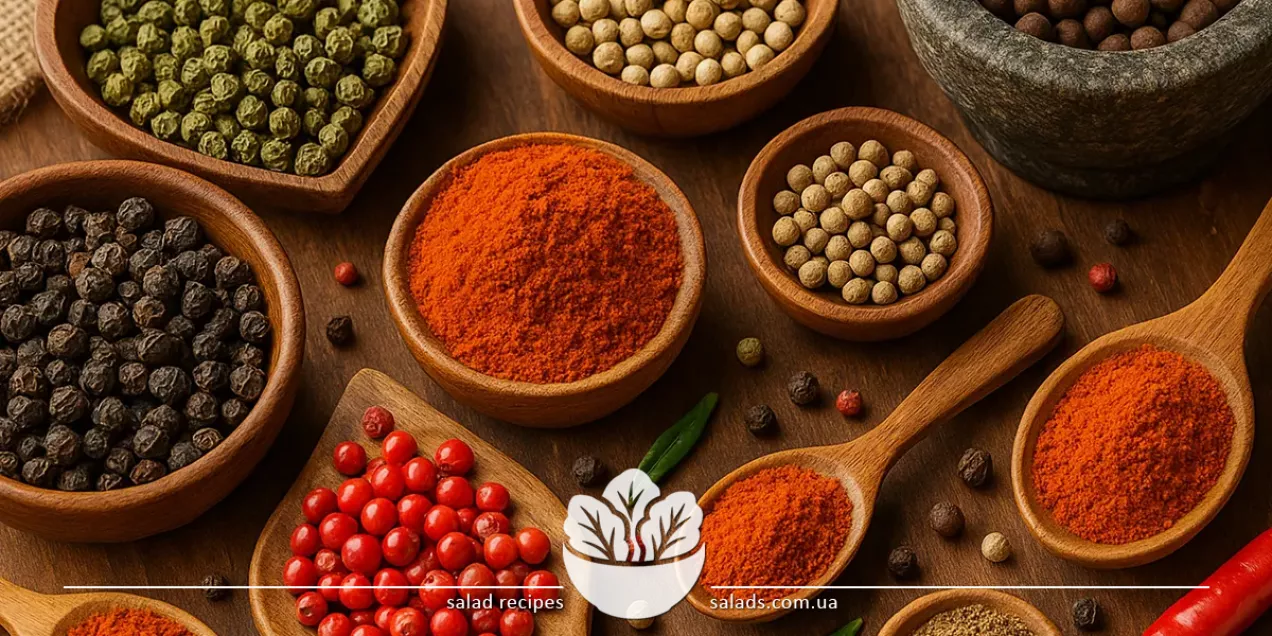
Pepper is one of the most versatile and widely recognized spices in global cuisine. It is used fresh, dried, ground, crushed, or as whole peppercorns. Pepper adds not only spiciness but also a distinctive aroma that enhances meat, fish, vegetables, soups, and sauces. Different types of pepper have unique flavor profiles – ranging from mild spiciness to intense heat. Depending on the variety and processing method, pepper can be black, white, green, pink, or red, and is often included in spice blends. Learn more about other spices in the spices category.
Different Types of Pepper

Main Pepper Varieties and Their Properties
The most popular type of pepper is black pepper – a classic spice made from unripe berries of the Piper nigrum plant. After drying, the berries wrinkle and darken, gaining a rich aroma and moderate heat. White pepper is made from the same berries, but with the outer skin removed. It has a milder yet deeper flavor and is ideal for light sauces, fish, and creamy dishes. Green pepper is made from unripe berries that retain their color through rapid drying or pickling. It has a fresher, more herbaceous aroma and milder heat. Pink pepper, despite its name, does not belong to the Piper family – it comes from the Schinus molle tree and has a slightly sweet and bitter taste with a decorative appearance. It is often used in salads, sauces, and gourmet cuisine. Chili and cayenne peppers belong to the Capsicum genus and add characteristic heat to dishes due to their capsaicin content. They are used ground, in flakes, or as part of spice blends for meat, soups, and spicy sauces. Allspice, from the Pimenta dioica plant, forms a separate group with a complex aroma combining notes of cinnamon, cloves, and nutmeg. It is commonly added to marinades, preserves, and game dishes. When combined with other spices, such as salt, pepper helps create a balanced flavor profile that is difficult to replicate with other seasonings.
Form, Grind Level, and Flavor Impact
Pepper is available in various forms, each affecting the flavor of a dish differently. The most common are whole peppercorns and ground pepper. Whole peppercorns retain their aroma much longer than ground pepper, which is why grinding them right before use is recommended. Manual or electric grinders are used to control the grind size. Coarsely ground pepper provides texture and bold heat – perfect for marinades, steaks, and roasts where spices shouldn't fully dissolve. Medium or finely ground pepper is better suited for soups, sauces, dressings, and salads, as it distributes evenly and releases its aroma quickly. Ultra-fine powder, often sold in packets, has the least intensity and quickly loses flavor when stored too long.
Pink pepper is typically not ground and is used whole as a flavorful and decorative accent. Chili pepper is often crushed into flakes or paste, allowing precise control of spiciness. Some recipes use blends of several types of pepper – black, white, green, and allspice – to achieve depth and complexity. These combinations work especially well in dishes with meat, legumes, or grains. To balance hot spices, recipes often include contrasting flavor elements. For example, a small amount of sugar in a marinade or sauce can soften the sharpness of pepper and highlight the natural flavors of the main ingredients.
Using Pepper in Cooking
Pepper is a spice with virtually no usage limits. It is added to soups, main courses, appetizers, sauces, baked goods, marinades, beverages, and even desserts. In traditional cooking, ground black pepper is often used to season soups, stews, meat dishes, and grains. Whole peppercorns are added to broths, preserves, and pickling liquids, where they release their aroma gradually. White pepper is popular in delicate dishes – fish, poultry, creamy sauces, and mashed potatoes. In Asian cuisine, various types of hot pepper – from fresh chili to dried flakes – are widely used to enhance soups, noodles, curries, and stir-fries. In Mexican cuisine, pepper is the foundation of salsa, meat dishes, and traditional snacks. In Mediterranean cuisine, black and pink pepper are used to season cheese, olives, tomatoes, and grilled fish. Pepper is also found in many spice blends: curry, garam masala, harissa, and flavored salts. It is combined with coriander, cumin, ginger, turmeric, paprika, and salt. Depending on the combination, you can achieve different flavor profiles – from mild and sweet to bold and spicy. It's worth noting that in salads, appetizers, or spicy sauces, pepper is often paired with other piquant components. For example, onion adds intensity, enhances aroma, and provides a pleasant textural contrast.
Pepper in Spice Mixes and Complex Sauces
Pepper is a key component in many popular spice blends used in global cuisines. The simplest are basic combinations with salt, dried garlic, or paprika – suitable for everyday seasoning of meat, potatoes, and soups. More complex blends include several types of ground pepper along with other spices like cloves, nutmeg, coriander, and ginger. Examples include French quatre épices, Indian garam masala, Middle Eastern za’atar, and Chinese five-spice blend. Pepper is also frequently used in complex sauces. In soy or tomato-based sauces, it provides background heat and enhances flavor depth. In sauces for pasta, meat, and casseroles, it adds piquancy and character. When a sauce includes a sweet or sour note – such as honey, fruit vinegar, or caramelized onion – pepper balances the taste and creates harmony in the composition.
Pepper-based spice blends are commonly used in marinades for roasting or grilling. Depending on the additional ingredients – oil, vinegar, mustard, soy or fish sauce – they create flavor mixes of varying intensity for meat, poultry, or vegetables. For example, barbecue recipes often pair black pepper with smoked paprika, garlic, and sugar. In Asian dishes, spiciness is enhanced with a mix of pepper, ginger, garlic, sesame, and chili paste. Among these elements, sauces play a special role. For instance, types of mustard are classic pepper partners in many recipes, offering depth and heat without overwhelming the dish.
How to Choose, Store, and Use Pepper
To ensure that spices retain their aroma and flavor for as long as possible, proper selection and storage are essential. Whole peppercorns should be dry, firm, evenly colored, and free from impurities. For ground pepper, choose products in tightly sealed packaging marked with the producer, country of origin, and packaging date. An overly bright color, unpleasant smell, or moisture inside the package are signs of low-quality or spoiled goods. Ground pepper quickly loses its aroma, so it’s best to buy it in small quantities. Ideally, have a home grinder and grind peppercorns just before cooking – this allows you to control the grind level and achieve a rich flavor. Store spices in airtight containers, in a dark, dry, and cool place away from the stove, moisture, and sunlight. In recipes, it's important not to overdo it – pepper should be added gradually, adjusting the taste step by step. If pepper is part of a spice blend or used alongside other spicy ingredients, reduce the quantity. This is especially important in salads, sauces, and marinades where a delicate balance is key. For example, light dressings benefit from combining pepper with types of soy sauce – they complement each other’s flavor without overpowering the overall harmony.