Cilantro
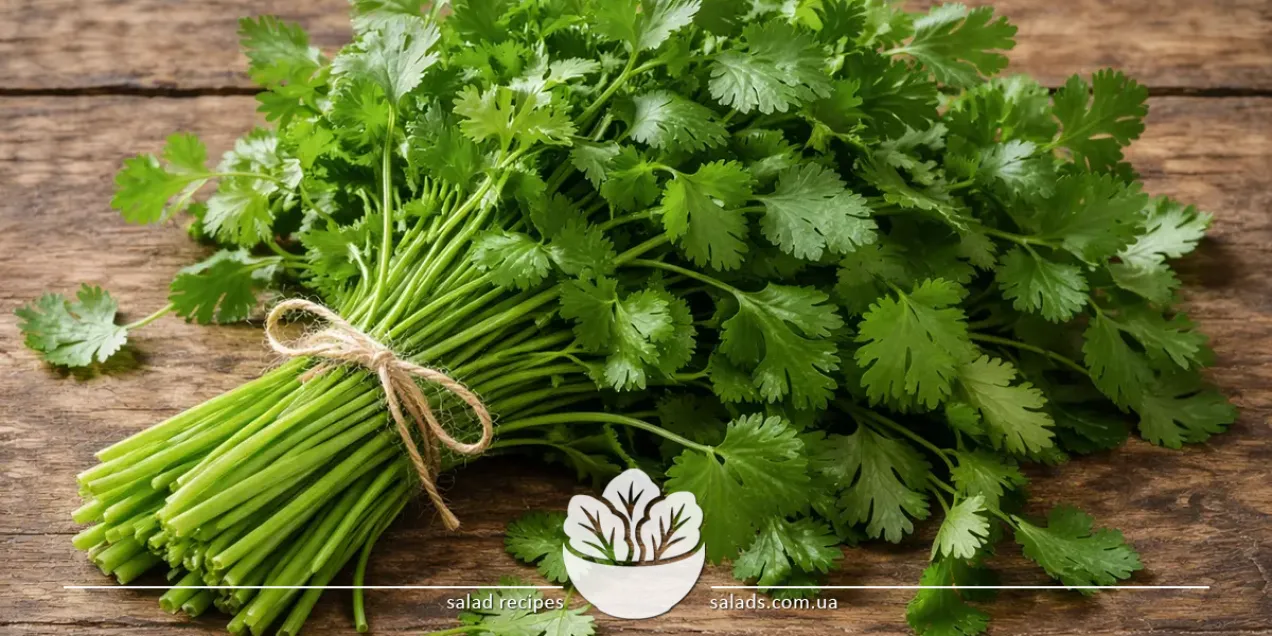
Cilantro is an aromatic herb, also called coriander leaves, widely used in cooking to give dishes freshness and a characteristic spicy note. It belongs to the family of herbs and is valued for its rich aroma that combines light citrus tones with herbal freshness. Fresh leaves are added to salads, soups, sauces, and marinades, used either as a finishing touch or as a main aromatic component. Cilantro pairs well with vegetables, seafood, and grain-based dishes, creating a vibrant flavor contrast. It is added at the end of cooking to preserve its delicate aroma and juicy leaf texture. Thanks to its expressiveness, cilantro can completely transform the character of even the simplest dish.
Recipes with cilantro
Cilantro in salads and cold dishes
Cilantro is most often used fresh, as its aroma develops fully without heat treatment. Finely chopped leaves are added to green salads, vegetable mixes, and seafood appetizers. In combination with fresh cucumber, cilantro creates a refreshing contrast, highlighting the juiciness of vegetables and giving the dish a light spicy depth. This pairing is especially suitable for summer dishes, where lightness and clarity of flavor are important without an excess of spices. Cilantro leaves pair well with tomatoes, avocado, and citrus juices, forming a bright flavor profile. They are often added to cold sauces or spreads, where the aroma becomes the central accent. In seafood salads, a few sprigs of cilantro can refresh the composition and make it more dynamic.
In cold appetizers, cilantro is added at the end of preparation to preserve leaf texture and aroma intensity. It does not require long marinating or mixing – a gentle toss with the main ingredients is enough. This way, cilantro leaves remain vibrant and retain their characteristic herbal tone. In grain- or rice-based dishes, cilantro works as a contrast to the neutral base. It adds depth and freshness without overwhelming the flavor. That is why cilantro has become a popular ingredient in many modern salads that combine vegetable lightness with the expressiveness of aromatic herbs.
Cilantro in hot dishes and soups
Although cilantro is more often added fresh, it also works well in hot dishes. The key is choosing the right moment: coriander leaves are placed in the dish at the end of cooking or just before serving to preserve aroma and bright color. In noodle or vegetable soups, it acts as a final touch that refreshes a rich broth and makes the flavor more expressive. In seafood dishes, cilantro highlights the delicate aroma without overpowering it. For example, when combined with boiled shrimp, the leaves create a light citrus-herbal accent that adds freshness to the dish. Such combinations are often used in warm salads or quick stir-fried dishes, where harmony between spice and the natural taste of ingredients is essential.
In grain-based dishes, cilantro helps prevent monotony. A small amount of chopped leaves added to hot porridge or rice changes the perception of texture and adds a subtle aroma. It works especially well with neutral ingredients, where its flavor becomes noticeable but not aggressive. In stewed vegetables, cilantro leaves create a bright contrast to the slightly sweet notes of carrots or peppers. It does not require prolonged heating – adding it at the very end allows the aroma to develop without becoming sharp. This approach makes cilantro a subtle flavor regulator rather than a dominant spice.
Cilantro in sauces and marinades
Cilantro is excellent for preparing aromatic sauces and marinades, where the greens are blended with other ingredients to a smooth consistency. In such mixtures, it becomes the base of a fresh herbal profile that complements meat, fish, or vegetables. In combination with soy sauce, cilantro leaves create a bright balance of salty and spicy notes, especially suitable for quick marinades and pan-cooked dishes. In green sauces, cilantro is often combined with acidic components and a small amount of oil. The leaves are blended together with the stems, as they contain a significant portion of the aroma. This paste works well as a topping for roasted vegetables or as a sauce for hot dishes. Cilantro does not dominate but enhances other components, creating a sense of freshness.
In marinades, cilantro leaves help create a more complex flavor profile. Their aroma combines with spices and acidic notes, making the marinade deeper and more layered. Cilantro is best added directly before cooking or after heat treatment to preserve its aromatic intensity. Sauces based on cilantro can be either thick or more fluid. In any case, the leaves serve not only as an aromatic element but also as a visual accent that makes the dish more appetizing. Thanks to its versatility, cilantro has become a popular component of various sauces and marinades in modern cuisine.
Pairing cilantro with grains and vegetables
Cilantro reveals its character especially well in dishes with a neutral base, where its aroma becomes the main accent. In combination with white rice, it gives the dish freshness and light spicy depth. Adding chopped leaves at the end of cooking is enough for the grains to acquire a more expressive flavor profile without using a large amount of spices. This technique makes even a simple side dish more interesting and aromatic. With vegetables, cilantro leaves create bright contrasts. When combined with avocado, tomatoes, or peppers, they highlight juiciness and add a light citrus note. If added to warm vegetable mixtures, cilantro should be introduced at the very end to preserve color and leaf texture. This helps avoid excessive bitterness and loss of aroma.
Cilantro also works well in legume-based dishes, where it helps balance the dense texture of ingredients. It does not overpower the flavor but creates a sense of lightness. For this reason, cilantro leaves are often used as a final accent that brings all components of a dish together into a cohesive composition. In everyday cooking, cilantro can serve as a universal aromatic element. It pairs easily with various ingredients, allowing experimentation with proportions and presentation. Its ability to add freshness and character without complex culinary techniques makes cilantro a popular ingredient in modern cuisine.
Flavor characteristics and proper use of cilantro
Cilantro has a recognizable aroma that some perceive as fresh and citrusy, while others describe it as sharp or even soapy. This is related to natural essential compounds that are perceived differently by taste receptors. Therefore, it is important to dose cilantro leaves correctly so that they do not dominate but harmoniously complement the dish. It is best added in small portions, gradually evaluating the result. In dishes with a soft texture, cilantro works as a contrast, providing a bright herbal accent. It pairs well with creamy components and rich sauces, where its freshness balances intensity. In combination with avocado, the leaves create a mild yet expressive flavor balance often used in salads and spreads.
To preserve aroma, cilantro should not be subjected to prolonged heat treatment. Adding it at the end of cooking allows its natural properties to unfold fully. If a more delicate result is needed, the leaves can be finely chopped or blended together with the stems – they contain a significant share of the aroma. In everyday cooking, cilantro can serve as a finishing touch that unites ingredients into a harmonious composition. Its versatility lies in its ability to change the character of a dish without complex techniques. Just a few sprigs are enough to give a recipe freshness and expressiveness while maintaining balance and the natural taste of ingredients.