Parsley
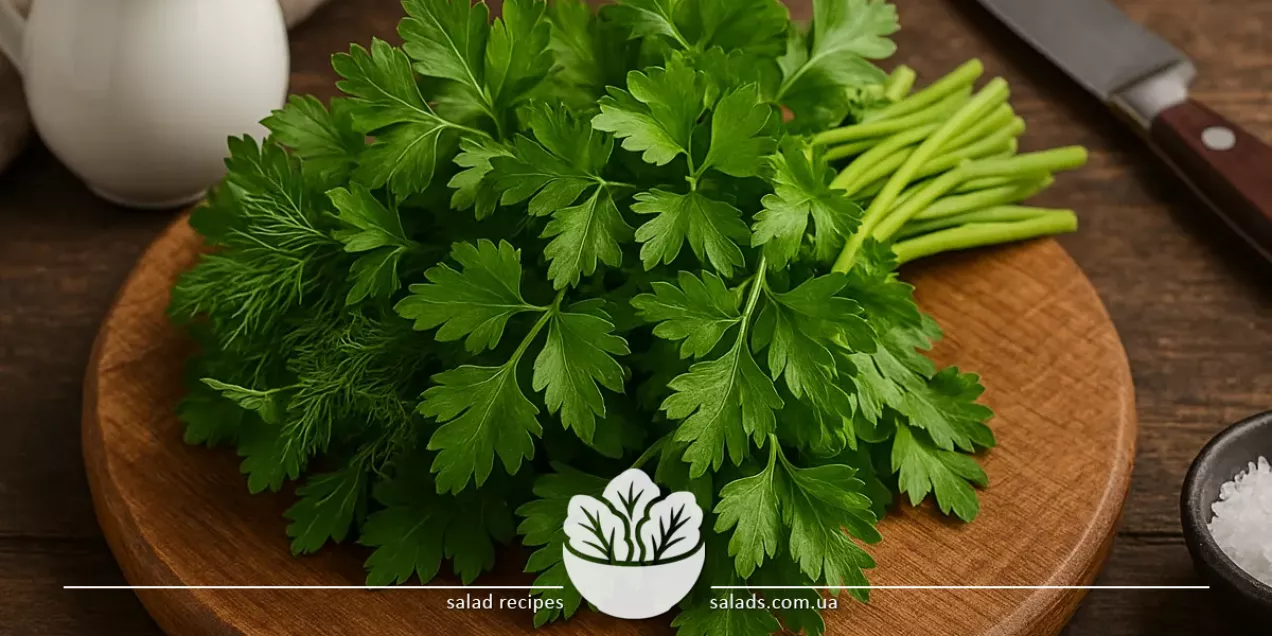
Parsley is a fragrant herb with a pleasant, slightly spicy taste, widely used in cooking to enhance the aroma and appearance of dishes. It is included in soups, salads, side dishes, meat and fish recipes, and is also used in cold appetizers and sauces. Parsley can be added fresh or cooked – its aroma withstands heat well. In the herb varieties section, you’ll find other aromatic herbs that pair well with parsley for balanced flavors.
Salad Recipes with Parsley
Parsley is a universal herb that not only decorates salads but also gives them a fresh, slightly spicy flavor and aroma. It is widely used in classic vegetable salads – with cucumbers, tomatoes, bell peppers, and green onions – where parsley adds a vibrant green note. In recipes with beets, beans, carrots, or sauerkraut, it serves as an aromatic enhancer, especially when paired with garlic or onions. The tabbouleh salad is also very popular – a light Middle Eastern dish featuring lots of parsley, bulgur, tomatoes, and lemon dressing. In meat salads, especially with chicken, turkey, or beef, parsley adds freshness and balances the richness of the main ingredients. It also pairs wonderfully with eggs, cheese, potatoes, and mayonnaise-based dressings, particularly in traditional Ukrainian dishes. In vegan and Lenten recipes, parsley is the primary green, highlighting the natural flavors of vegetables and legumes. Regardless of the ingredients, adding parsley makes any salad more vibrant, aromatic, and nutritious.
Parsley in Salads: Freshness, Aroma, and Color
Parsley is one of the most popular salad ingredients, thanks to its subtle aroma, bright green color, and ability to blend with a wide variety of components. It complements both light vegetable salads and more complex combinations with grains, legumes, or proteins. Fresh parsley is chopped finely or coarsely, depending on the desired effect, and added just before serving to preserve its aroma. A classic combination includes tomatoes, cucumbers, red onions, oil, and parsley. In summer salads, it brings lightness and freshness. In grain-based salads such as tabbouleh, parsley is the main flavor base. It also works well in salads with cooked vegetables, legumes, cheese, or eggs. Parsley serves not only as a flavor accent but also enhances the dish’s visual appeal. For example, in a salad with fresh tomatoes, feta, olives, and olive oil, parsley complements the salty taste of the cheese, adding lightness and a pleasant aftertaste. It can also be used as a purée or green sauce – a great option for warm salads with potatoes, mushrooms, or grains. Salads with parsley are always a winning choice for those who appreciate natural aromas and a balanced taste.
Parsley in Soups and Hot Dishes: A Green Accent and Aroma
Parsley is widely used in the preparation of first and second courses, especially in soups, stews, braised vegetables, and meat dishes. It is added at the final stage of cooking or just before serving to preserve essential oils and provide a noticeable yet subtle aroma. Parsley pairs well with both light vegetable ingredients and richer meat or mushroom-based components. In classic Ukrainian soups – borscht, solyanka, cabbage soup, mushroom broth – parsley is a familiar ingredient. It holds up well in hot environments, retaining its color and aroma when added at the end. In meat dishes such as goulash, stews, or stuffed vegetables, parsley helps balance the intensity of the main ingredient. It is also common in vegetable sauces, side dishes, and casseroles. Parsley works particularly well with mushrooms – for example, in a cream soup made from champignons, where it adds aromatic balance to the creamy base. In dishes with beans or lentils, it lightens the overall feel and highlights natural flavors. Parsley in hot recipes demonstrates how a simple herb can complete a flavor profile and make it more interesting and appetizing.
Parsley in Sauces and Dressings: Aromatic Depth for Every Dish
Parsley is perfect for preparing sauces, purées, dips, and salad dressings. Its green aroma blends easily with citrus juice, garlic, nuts, dairy products, and oil. Parsley-based sauces have a fresh, slightly spicy character and can be either light or rich depending on the combination. The best-known version is a sauce made from parsley, garlic, lemon juice, and olive oil – ideal for meat, fish, eggs, vegetables, and even bread. In Mediterranean recipes, parsley is often combined with nuts (especially walnuts), cheese, and a dairy base to create thick green pastes used as appetizers or side condiments. In vegetarian cuisine, such sauces replace more complex gravies, giving simple foods a fresh and natural taste. Parsley is also excellent in salad dressings – especially when paired with vinegar, honey, mustard, or yogurt. For example, a green sauce made with parsley and feta cheese can be a great addition to a vegetable salad or toast. Such dressings are visually appealing, enrich the texture, and make even the simplest dish feel more sophisticated. Parsley sauces are a great way to elevate everyday meals.
Parsley in Egg Dishes, Casseroles, and Pies: Lightness and Aroma
Parsley goes well with eggs, dairy products, and pastry bases, making it a popular ingredient in breakfast and light snack dishes. It complements egg mixtures harmoniously, adding color and aroma, while enhancing creamy or cheesy notes. It is added to omelets, scrambled eggs, frittatas, savory pancakes, casseroles, and open pies. In these dishes, parsley is usually chopped and mixed directly into the batter or sprinkled on top before baking. It tolerates heat well, retaining part of its aroma. The herb also pairs nicely with other ingredients such as vegetables, mushrooms, cheeses, and ham, allowing recipes to be varied depending on what’s available. For example, in a casserole made with chicken eggs, herbs, cheese, and vegetables, parsley serves as a flavor accent and color balancer. It’s also ideal for open pies (quiches) with a creamy base – especially when combined with hard or fermented cheeses. In such recipes, parsley adds freshness and lightness, balancing the richness of the main ingredients. This shows how a simple herb can elevate a familiar dish into something more refined and appealing.
Parsley in Appetizers, Sandwiches, and Fish Dishes: Flavor Balance and Visual Harmony
Parsley is ideal for appetizers due to its versatility, gentle aroma, and ability to harmonize intense or salty flavors. It is added to pâtés, spreads, meat rolls, canapé salads, and is also used as a garnish on sandwiches. Fresh parsley not only decorates dishes but also refreshes the flavor, balancing out heavy or fatty ingredients. In cold appetizers, it is often combined with cheese, garlic, butter, or yogurt. This green mixture is used as a spread or a filling for stuffed vegetables, eggs, or tartlets. Parsley is also added to salads with fish, eggs, or pickled vegetables, where it softens sharp or salty notes and adds a fresh aftertaste. In toast or cracker-based appetizers, finely chopped parsley is often mixed with lemon juice and butter – this blend adds sophistication to even the simplest combinations. Parsley pairs especially well with salted fish, such as herring, as seen in classic appetizers with beets, eggs, or potatoes. It is also frequently used to decorate festive appetizers – rolls, tartlets, meat or cheese platters. Parsley adds not only aroma but also a finished touch – making even the simplest recipe expressive and well-balanced.